Who to tell first when a reaction appears
The manufacturer lists the reactions it anticipates after ultrasound-based treatment: significant pain, tenderness, changes in skin pigmentation, persistent erythema and edema (redness and swelling), ulceration or erosion, and bruising (Sofwave safety information, accessed 24 October 2026). Milder redness and swelling right after treatment are covered in the aftercare windows.
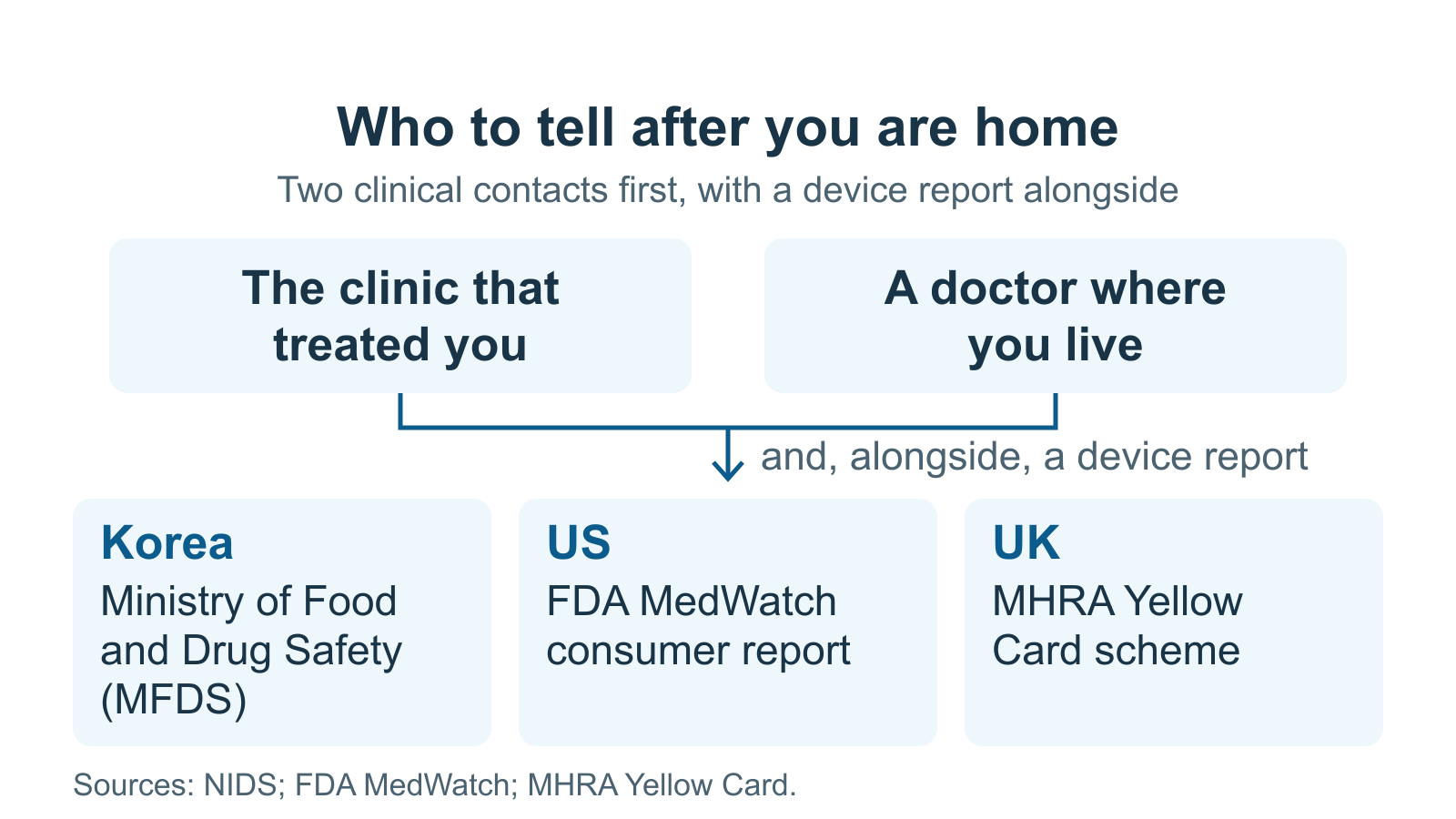
The clinic and the local doctor do different jobs. The clinic that treated you holds the record of the device, applicator, areas and amount of treatment, and can look at your photographs and advise. A doctor where you live can examine the skin in person, which no message can do. Book that examination and send the clinic the details at the same time.
What to send the clinic in the first message
- Your name as it was booked, the treatment date and the areas treated.
- The device and applicator named on your treatment record or quote.
- What changed, when it started, and whether it is improving, staying the same or getting worse.
- Photographs of the area in daylight from the front and both sides, with the date in each file name.
- Any treatment, medicine or skincare product you started after the visit.
- How and when you can be reached, allowing for the time difference with Korea.
If you left Korea without a copy of the treatment record, ask for it in the same message. A checklist of records to request after skin treatment in Korea covers what to ask for and how to share records at a follow-up visit. Arrangements that are easier to agree before departure are in the short-trip planning notes.
| Detail | Where it usually is |
|---|---|
| Name of the device and of the company that makes it | The treatment record or quote names the device; Sofwave Medical Ltd. makes the Sofwave system |
| Model, catalog, lot or serial number and the unique device identifier | Ask the treating clinic in writing |
| Date the problem began and what happened | Your own notes and dated photographs |
| Who operated the device | The clinic can confirm whether a doctor or another health professional treated you |
Reporting the device in Korea, the US and the UK
In Korea, device companies, general consumers and medical institutions report medical device side effects to the Ministry of Food and Drug Safety, and the National Institute of Medical Device Safety Information analyses and evaluates the information collected and answers questions about reporting (NIDS device safety information, in Korean, accessed 24 October 2026). Ask the treating clinic whether it has reported the event.
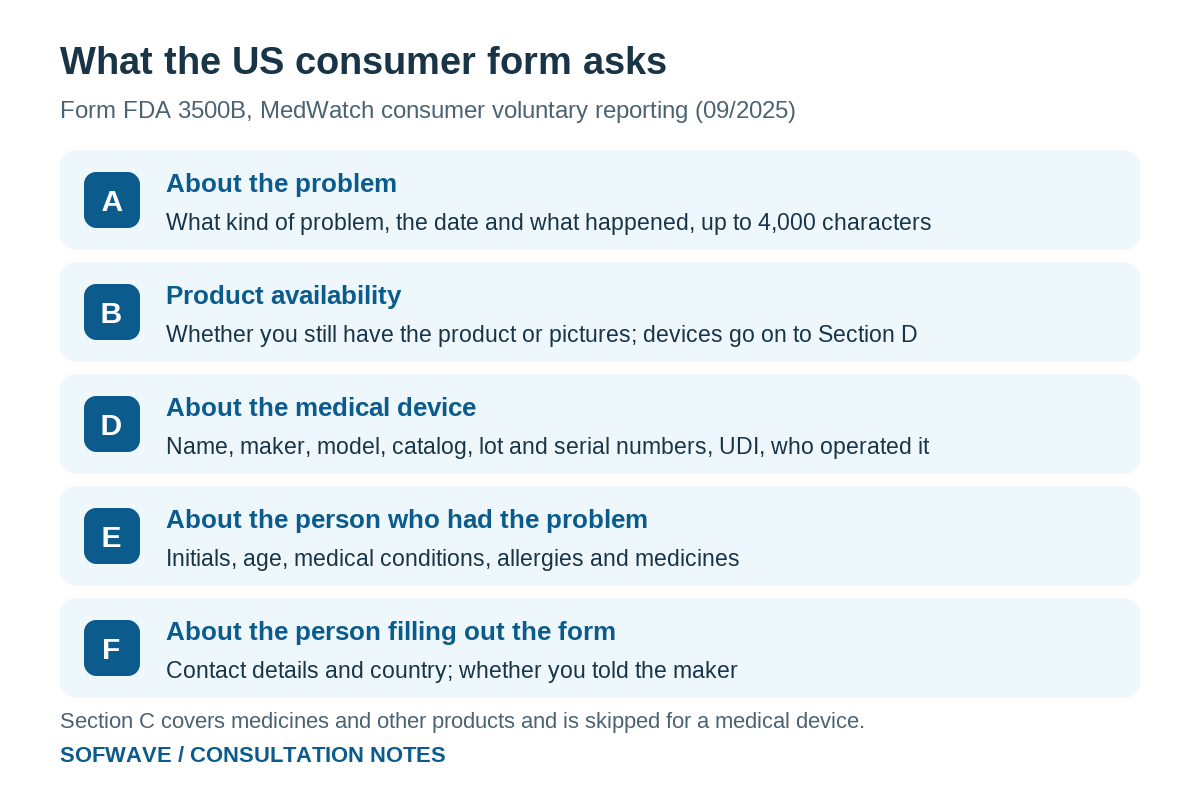
In the US, FDA encourages patients and consumers to submit voluntary reports about serious adverse events that may be associated with a medical device (How to report medical device problems, accessed 24 October 2026). The consumer form is Form FDA 3500B: it can be filed online through MedWatch or printed and sent by mail or fax, and a copy can be requested on FDA’s toll-free line, 1-800-332-1088 (Form FDA 3500B, version 09/2025, accessed 24 October 2026). The form asks you to send the report even without every detail, and states that a report is not an admission that medical staff or the product caused the event.
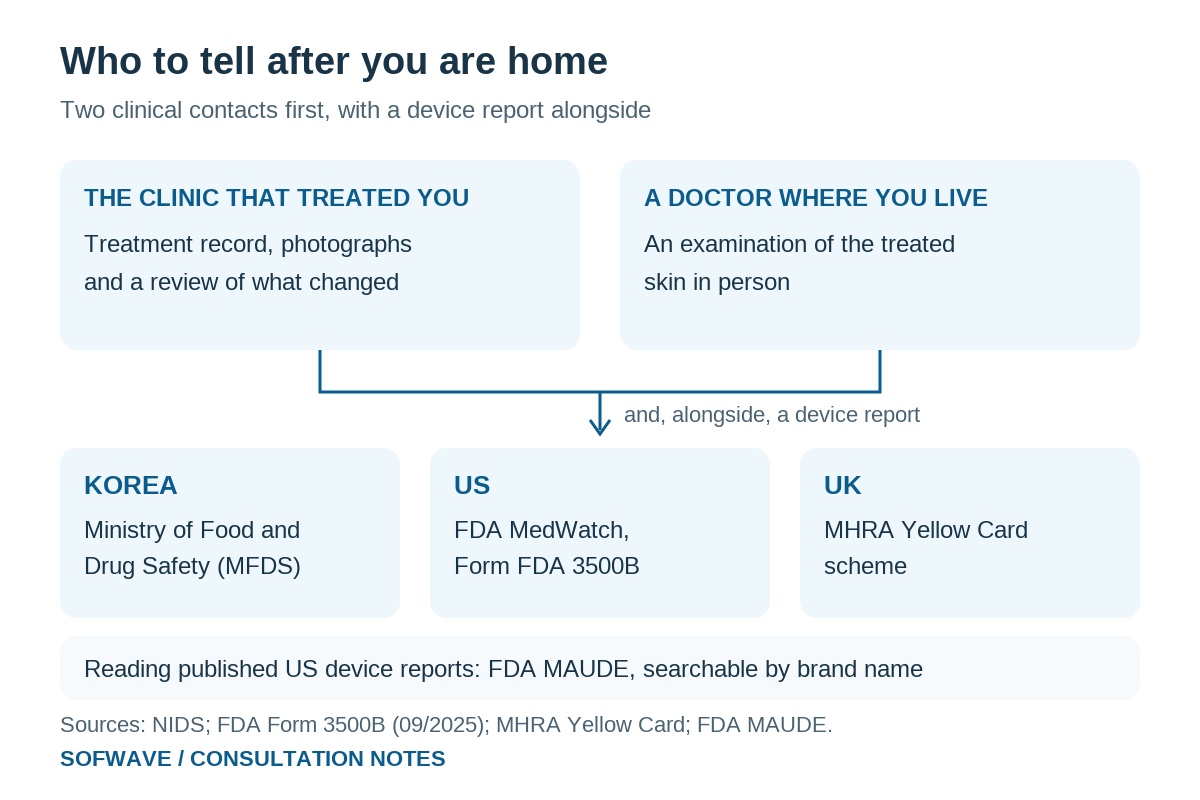
In the UK, anyone can report an issue with a medical device to the MHRA’s Yellow Card scheme (Yellow Card scheme, accessed 24 October 2026). Elsewhere, ask the doctor who examines you which body takes device reports in your country.
FDA’s MAUDE database can be searched by brand name, manufacturer or the date a report was received. It holds reports from manufacturers, importers and device user facilities as well as voluntary reports from health professionals, patients and consumers, and it is updated every month (MAUDE database, accessed 24 October 2026).
If you and the clinic cannot agree on what happened, Korea’s Medical Dispute Mediation and Arbitration Agency offers counselling and mediation and posts its application forms in English (K-Medi in English, accessed 24 October 2026).
Can I report a Sofwave problem to FDA if I was treated in Seoul?
Form FDA 3500B covers problems after using a medical device. It asks for the device name, the company that makes it and the country of the person filling out the form, and it asks you to send the report even if some details are missing. Form FDA 3500B (accessed 24 October 2026).
Will the manufacturer see my name if I file a US report?
Your name and contact details may be shared with the company that makes the product unless you mark the box in Section F of Form FDA 3500B asking that your identity not be disclosed to the manufacturer.
What can MAUDE tell me about Sofwave?
It shows what reporters have sent to FDA about a device, searchable by brand name. FDA notes that the incidence, prevalence or cause of an event cannot be determined from these reports alone. How to report medical device problems (accessed 24 October 2026).