
Which ultrasound technologies are being compared?
A 2026 review distinguishes synchronous ultrasound parallel beam (SUPERB) technology from microfocused ultrasound with visualization (MFU-V). SUPERB targets the mid-dermis at 1.5 mm; MFU-V uses transducers at depths from 1.5 to 4.5 mm, targeting the deep dermis and superficial musculoaponeurotic system (SMAS)[1]. These are differences in delivery, not a ranking of results.
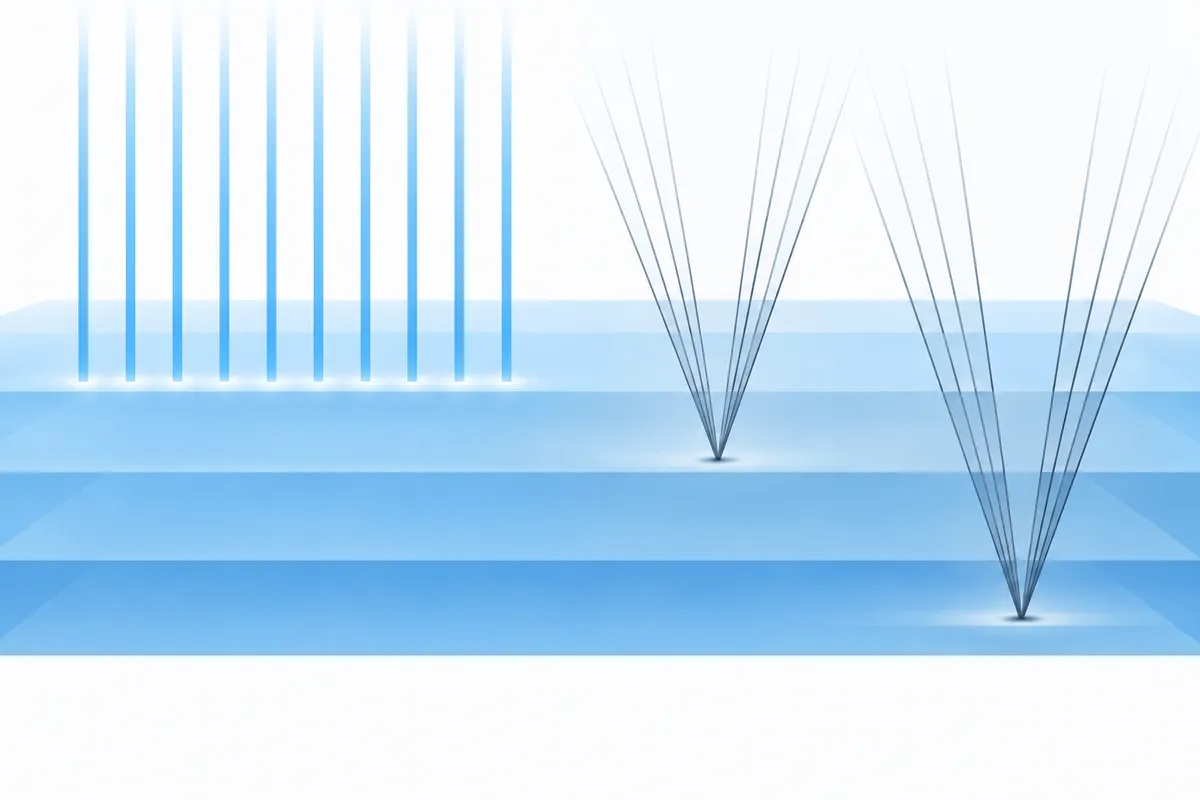
Ask for the model name behind a “HIFU” quote. Evidence for microfocused ultrasound with visualization should be matched to that modality, rather than applied to every device sold under the HIFU label. For label and record questions, see checking Sofwave device information.
What the cited trial compared
The randomized comparison studied high-intensity parallel-beam ultrasound (HIUS) and microfocused ultrasound with visualization (MFU-V) on the upper inner arms[2].
| Study detail | What was assessed |
|---|---|
| Design and population | Single-center, blinded, randomized split-body study; 14 women completed it. |
| Body site and treatment | Upper inner arms; each participant received one treatment, with a different modality on each side. |
| Endpoints | Arm laxity and crepiness, investigator and participant assessments, satisfaction, pain scores and treatment time. |
| Follow-up | Day 30 and Day 90 assessments compared with baseline. |
The authors reported similar improvement in arm laxity and crepiness at 90 days, no statistically significant difference in pain scores, and longer treatment time with MFU-V[2]. The small, single-center study concerns arms and these follow-up visits; it does not establish equivalent facial outcomes or rank all HIFU devices.

Questions to take to a consultation
- Which device and applicator are you proposing, and why for this treatment area?
- Which study supports the outcome we are discussing, and did it examine the same body site?
- What change would you assess, and when would we review it?
- What discomfort, adverse effects and recovery arrangements should we discuss for this plan?
- If you suggest both treatments, what does each add, and what evidence supports the sequence?
- What alternatives, including waiting, should I consider?
How to compare the proposed plans
Ask for the device, areas, planned sessions, comfort arrangements and review arrangements in writing. Compare the same treatment area and scope before comparing totals. The quote checklist helps identify what is included.
Is Sofwave the same as microfocused ultrasound?
No. The review describes parallel-beam treatment at a fixed 1.5 mm depth and microfocused ultrasound with visualization at selectable depths from 1.5 to 4.5 mm[1]. Ask which device and depth are proposed for your treatment area.
Does the arm trial show which treatment is better for the face?
No. Its comparison concerned upper-arm laxity and crepiness, with assessments at 30 and 90 days[2]. A facial recommendation needs evidence for the facial concern being treated.
Can the comparison tell me which will hurt less?
The upper-arm trial found no statistically significant difference in pain scores between the two modalities[2]. Discuss comfort arrangements for the area and treatment plan proposed to you.