Ultrasound beams or radiofrequency current
Sofwave is ultrasound. A 2026 study describes its energy as sent through seven parallel beams to the mid-dermis at about 1.5 mm, heating that layer to 60–70 °C while integrated cooling protects the surface[1]. The Sofwave and HIFU comparison looks at that depth in more detail.
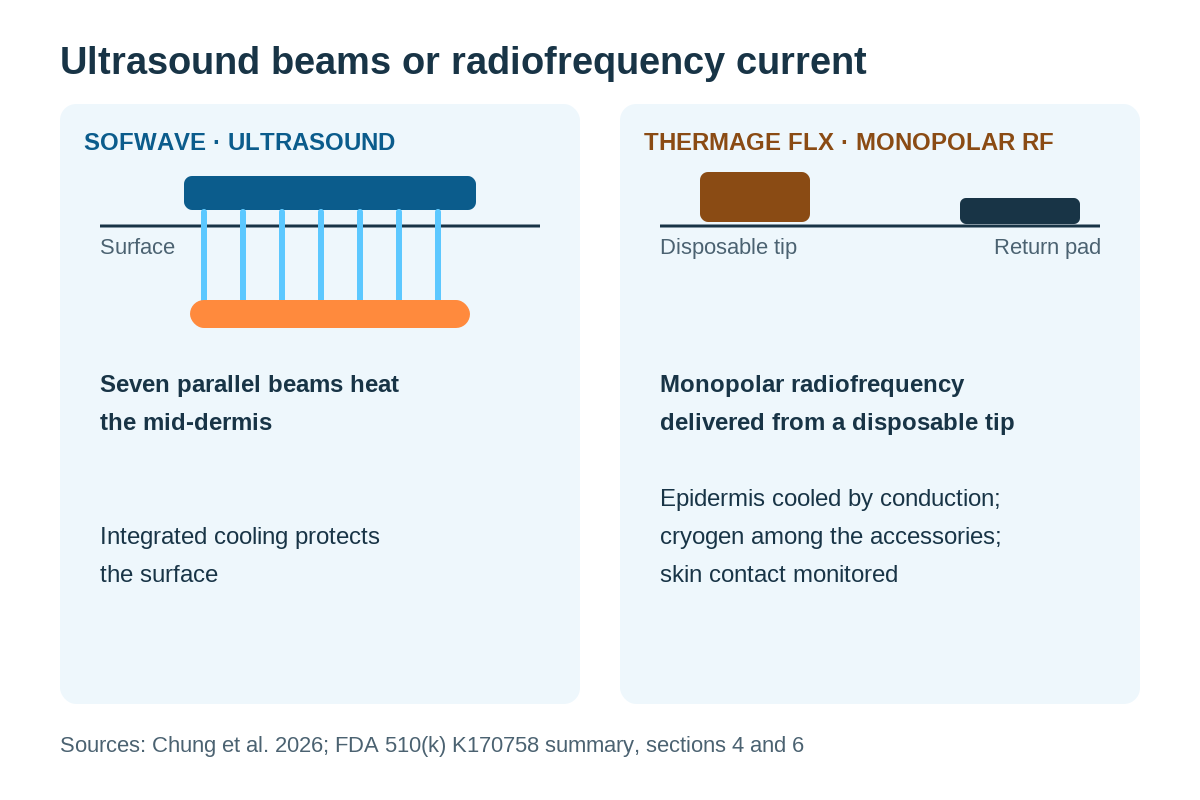
Thermage FLX is monopolar radiofrequency from Solta Medical. Its 510(k) summary, K170758 (FDA letter dated 22 September 2017; accessed 1 November 2026), describes radiofrequency energy delivered from a disposable tip at 6.78 MHz while the system cools the epidermis by conduction, and lists a return pad, coupling media and cryogen among the accessories used in each treatment.
What each US device record lists
K211483 (FDA letter dated 15 November 2021; accessed 1 November 2026) lists the SofWave System for improving facial lines and wrinkles, lifting the eyebrow, and lifting lax tissue under the chin and on the neck, in people aged 22 and older. K170758 lists Thermage FLX, used with radiofrequency alone, for wrinkles and rhytids, including those around the eyes and on the upper and lower eyelids; with skin vibration added, its list also includes a temporary improvement in the appearance of cellulite.
How the studies were run
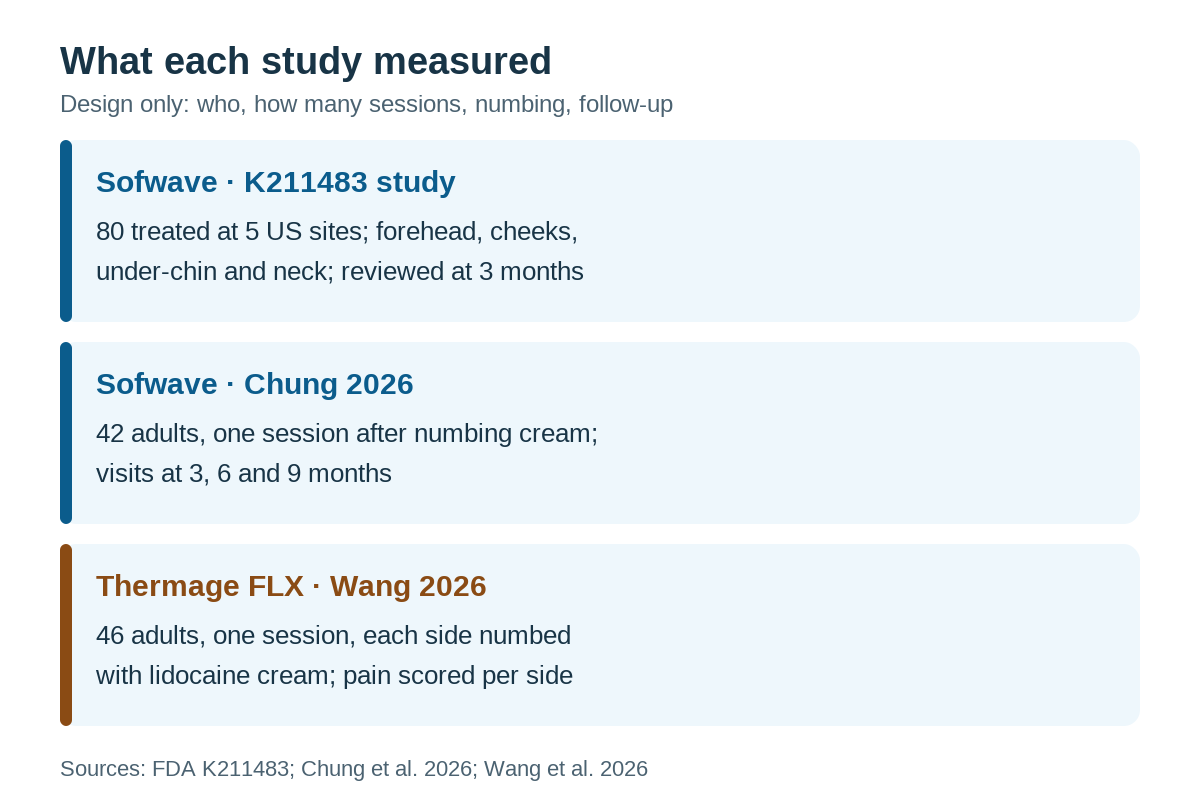
Sofwave, K211483. The study in the summary enrolled 92 people and treated 80 at five US sites, on the forehead and temples, the cheeks, and the area under the chin and the neck, with improvement rated at the three-month visit.
Sofwave, Chung 2026. Forty-two Asian adults aged 35 to 67 had one treatment of the face, neck and under-chin area after numbing cream, with visits at three, six and nine months. Sofwave Medical paid for the study[1].
Thermage FLX, Wang 2026. Forty-six adults at a Beijing hospital had both sides of the face treated in one session, each side numbed with lidocaine cream before it was treated. The study scored pain on each side within five minutes of treatment[2].
Questions to take to either consultation
Which device, and which tip or applicator?
- Why it matters.
- The Thermage FLX record describes energy delivered from a disposable tip; Sofwave delivers its parallel beams through an applicator.
- What a good answer includes.
- The device, the tip or applicator, and how many pulses each area will get.
- Treat with caution.
- A package name such as “lifting” with no device named.
Which areas, and are they in the device’s record?
- Why it matters.
- K211483 lists facial lines and wrinkles, the eyebrow and the under-chin and neck for Sofwave; K170758 lists wrinkles and rhytids, including around the eyes, for Thermage FLX.
- What a good answer includes.
- Each planned area named, with the device record or study that covers it.
- Treat with caution.
- “Full face” with no areas named.
How many sessions, and when is the review?
- Why it matters.
- The Sofwave facial study gave one treatment and looked again at three, six and nine months.
- What a good answer includes.
- A session count and a review date you can keep from home.
- Treat with caution.
- An open-ended package with no review.
What is the plan for discomfort?
- Why it matters.
- Both studies applied numbing cream before treatment; the Thermage FLX study numbed and treated one side at a time.
- What a good answer includes.
- Numbing, its timing and pauses, agreed before you start.
- Treat with caution.
- An assurance that everyone tolerates it, with no plan.
How is the skin surface cooled and checked?
- Why it matters.
- Sofwave uses integrated cooling; the Thermage FLX record describes conductive cooling of the epidermis, cryogen and skin-contact monitoring.
- What a good answer includes.
- The cooling and checks that will be used in your session.
- Treat with caution.
- No answer about cooling.
To see how one Seoul clinic describes the radiofrequency option, read its Thermage FLX treatment page; for Sofwave, the Sofwave quote guide lists what a written quote should include.
Booking either one in Seoul
Match the device named on the quote to its record before you book, as the Sofwave device check explains, and compare quotes by area and number of sessions rather than by total. If a reaction appears after you fly home, the contact routes after a trip set out who to tell.
Is Sofwave the same kind of treatment as Thermage?
No. Sofwave is ultrasound sent through seven parallel beams to the mid-dermis[1]. Thermage FLX is monopolar radiofrequency delivered from a tip on the skin, with a return pad among its accessories.
Which one is listed for the area around the eyes?
K170758 lists Thermage FLX for wrinkles and rhytids around the eyes, including the upper and lower eyelids. K211483 lists Sofwave for lifting the eyebrow and for facial lines and wrinkles.